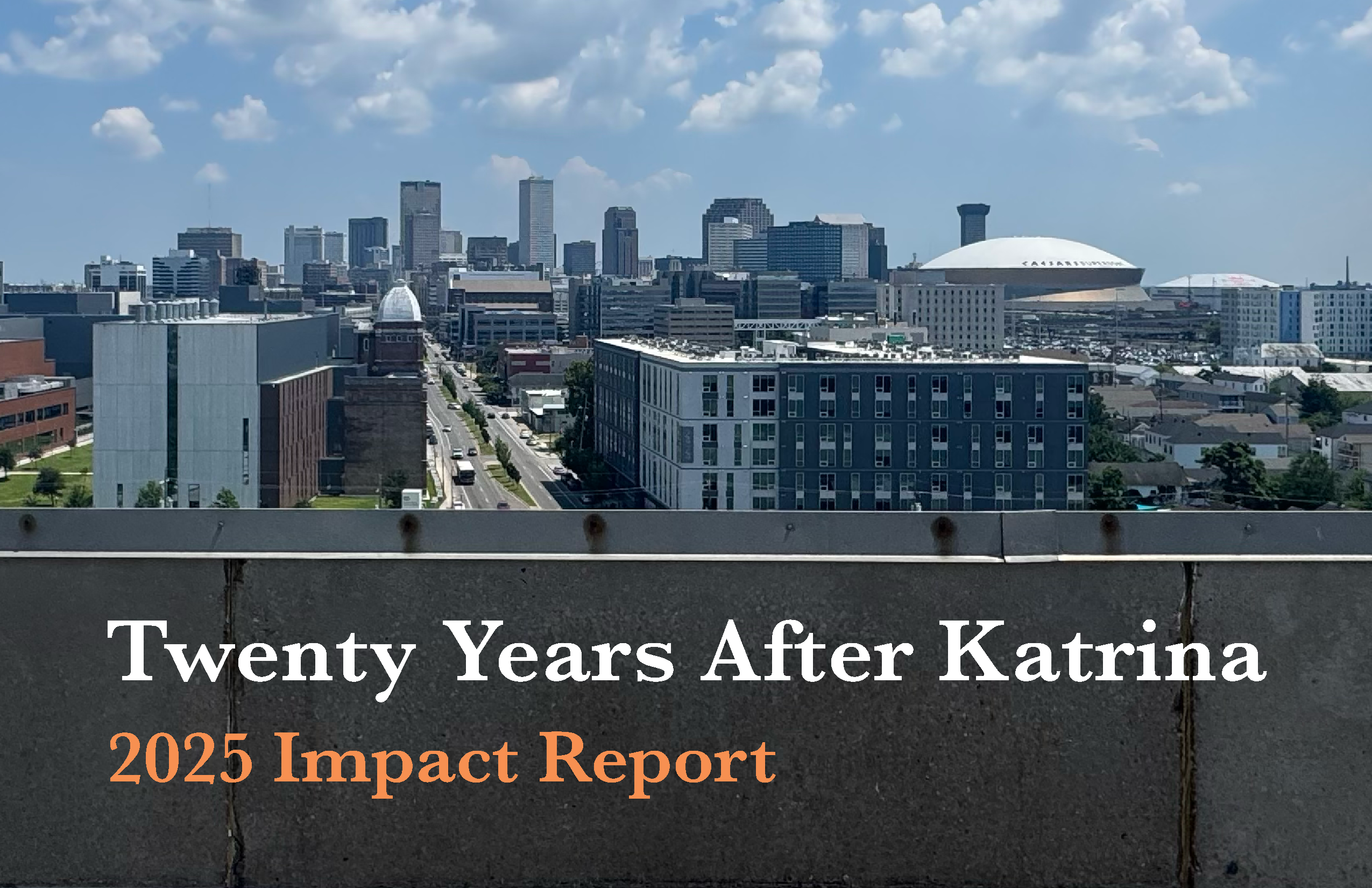
 Twenty Years After Katrina
Transforming Public Defense in New Orleans
Since Hurricane Katrina, public defense in New Orleans has undergone a profound transformation. What emerged from the storm was not only a rebuilding of physical infrastructure, but a reimagining of how constitutional defense could and should operate in a city shaped by deep inequities, mass incarceration, and community trauma. Orleans Public Defenders (OPD) was created in this context and has since evolved into a nationally recognized client-centered public defense.
This report situates OPD’s work in 2025 within the broader arc of growth and change since Katrina, highlighting how far public
defense has come, and the systemic pressures that continue to define the work today.
Public Defense Before and After Katrina
Prior to Hurricane Katrina, public defense in New Orleans was fragmented, under-resourced, and heavily reliant on court-appointed private attorneys paid per case. This structure incentivized speed over quality, offered little oversight, and provided minimal investigative or social service support to clients. Defendants routinely faced excessive delays, limited attorney contact, and inadequate advocacy.
Hurricane Katrina exposed and exacerbated these failures. Court closures, lost files, mass displacement, and prolonged pretrial detention underscored the constitutional crisis facing indigent defense in Orleans Parish. In the years that followed, litigation, community advocacy, and national attention created momentum for reform.
The establishment of Orleans Public Defenders marked a decisive shift, from a fragmented appointment system to a unified, institutional public defense office grounded in professional standards, ethical obligations, and accountability.
In the years that followed, litigation, advocacy, and national attention led to the creation of a unified public defender office grounded in professional standards, accountability, and full-time representation.